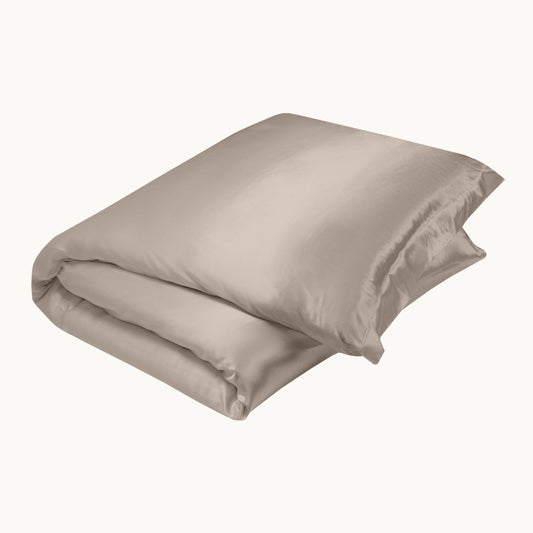
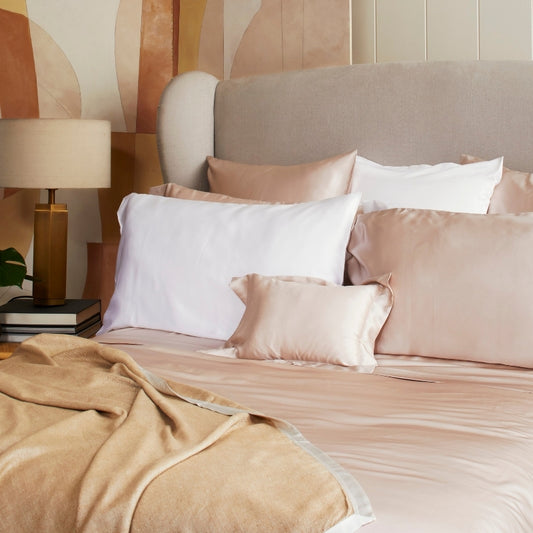
The best pillowcase for curly hair is one made from silk, a material that lets your curls move freely through the night rather than catching, compressing, and drying out against a rougher surface. At Gingerlily, we have spent more than 20 years working exclusively with 6A-grade, 19-momme long-strand mulberry silk, and the difference it makes to curly, wavy, and coily hair is one of the most consistent things we hear from our customers. Whether you have loose type 2A waves o...

What Is The Best Pillowcase for Curly Hair? Why Silk Wins
What Is The Best Pillowcase for Curly Hair? Why Silk Wins
Updated on 20 July 2026The best pillowcase for curly hair is one made from silk, a material that lets your curls move freely through the night rather than catching, compressing, and drying out against a rougher surface. At Gingerlily, we have spent more than 20 years working exclusively with 6A-grade, 19-momme long-strand mulberry silk, and the difference it makes to curly, wavy, and coily hair is one of the most consistent things we hear from our customers. Whether you have loose type 2A waves or tight 4C coils, the fabric you sleep on affects your hair more than most people realize.
This guide covers why silk is the best material for curly hair, how it compares with satin and cotton, what the specific benefits are, and how to choose the right silk pillowcase for your curl type, so you can stop undoing your routine every time you go to sleep.
Quick Navigation
- What Makes a Pillowcase Good or Bad for Curly Hair?
- Silk, Satin, or Cotton Pillowcase: Which Is Best for Curly Hair?
- Benefits of a Silk Pillowcase for Curly Hair
- How to Choose the Best Silk Pillowcase for Curly Hair
- Gingerlily’s Best Silk Pillowcases for Curly Hair
- Complete Your Overnight Silk Routine
- FAQs
What Makes a Pillowcase Good or Bad for Curly Hair?
The short answer is friction and moisture. Curly hair has a naturally irregular structure, the bends and curves in the hair shaft make it harder for your scalp's oils to travel the full length of the strand. That means it starts at a disadvantage when it comes to staying moisturized and defined. Put that hair against a rough or absorbent surface for seven or eight hours, and you compound the problem significantly.
Cotton pillowcases, still the most common type, absorb moisture from your hair and create friction as you move during sleep. That friction roughs up the hair cuticle, the outer layer of each strand, allowing moisture to escape and causing the strand-by-strand separation that shows up as frizz in the morning. The more movement, the more friction, the more the cuticle is disrupted. Cotton also draws out any conditioning products or oils you applied before bed, transferring them to the pillow rather than letting them work through the night.
A smooth, low-friction, non-absorbent surface changes all of that. It allows hair to glide rather than catch, keeps the cuticle flat, and lets your products and natural oils stay where they belong. That is the foundation of what makes silk the best pillowcase for curly hair.
Silk, Satin, or Cotton Pillowcase: Which Is Best for Curly Hair?
Silk is the best pillowcase material for curly hair. It combines the lowest friction of any natural fiber with genuine moisture retention, natural temperature regulation, and a durability that synthetic alternatives cannot match.
It is worth being clear about what satin actually is, because the two are frequently confused. Satin is a weave structure, not a fiber. Most satin pillowcases on the market are made from polyester, a synthetic material that mimics silk's smooth surface at a fraction of the price. That smooth surface does reduce friction compared to cotton, which makes polyester satin a meaningful step up for curly hair. But the similarities with silk end there.
Silk is a natural protein fiber, composed of amino acids that closely mirror the structure of human hair. That biological compatibility means silk does more than simply reduce friction against curls; it actively supports the hair's moisture balance, helps to reinforce the cuticle, and conditions as you sleep. Polyester has none of these properties. It is an inert synthetic that reduces mechanical damage but offers no biological benefit to the hair itself.
For curly hair, which is structurally more prone to dryness, cuticle disruption, and breakage than straight hair, that difference is meaningful. A polyester satin pillowcase addresses one problem, friction, while silk addresses several simultaneously: friction, moisture loss, cuticle smoothing, and hair strength over time. If you are investing in your curl care routine, the material your pillowcase is made from is worth getting right.
The honest comparison:
Material |
Friction / Frizz |
Moisture |
Temperature |
Best For |
|
Mulberry Silk |
Lowest friction, naturally smooth |
Retains natural oils and products |
Naturally regulating and breathable |
The best all-round results for curly hair |
|
Polyester Satin |
Low friction, smooth weave |
Does not retain moisture as effectively |
Traps heat and can cause night sweats |
An affordable starting point |
|
Cotton |
High friction, rough on curls |
Absorbs oils and strips products |
Breathable but inconsistent |
Generally the worst choice for curls |
Read Our Full Guide on Silk vs Satin Pillowcases
Benefits of a Silk Pillowcase for Curly Hair
Locks In Moisture Overnight
Moisture is everything for curly hair. It is what keeps curl patterns defined, prevents dryness, and determines how your hair behaves between wash days. Cotton pillowcases actively work against this, their absorbent fibers pull the natural oils and any leave-in products straight out of your hair and into the fabric, leaving curls dry and dehydrated by morning.
Silk is non-absorbent. Its tightly woven surface does not draw moisture from hair, which means the oils your scalp produces, and any overnight treatments you apply, stay in your strands where they belong. For high-porosity hair, which loses moisture faster than low-porosity hair and is common across type 3 and type 4 curl patterns, this is especially significant. And for color-treated or chemically processed hair, which is already more vulnerable to dryness and breakage, sleeping on a surface that preserves rather than strips moisture can make a noticeable difference to how hair looks and feels over time.
Reduces Frizz and Static
Silk pillowcases genuinely reduce frizz, and the reason is structural. Frizz is primarily caused by two things: friction lifting the hair cuticle, and moisture loss leaving the cuticle rough and irregular. Silk addresses both at once. Its smooth surface lets hair glide freely rather than snagging, and because it does not absorb moisture, the cuticle stays flatter and the hair shaft stays more hydrated.
Silk also carries a natural negative charge, which helps reduce static, a contributor to frizz and flyaways that is particularly noticeable with curly and coily hair types. Beyond the physical properties, silk contains natural proteins and amino acids that are structurally similar to those in human hair. Rather than roughing up the cuticle the way a synthetic fiber does, silk interacts gently with the hair surface, helping it stay smooth through the night.
Temperature Regulation for Hot Sleepers
This is one of silk's most underappreciated benefits for curly hair. Polyester satin traps body heat. For curly hair, that has a direct consequence: overnight sweating disrupts the moisture balance your curls depend on, displaces any product you've applied before bed, and contributes to frizz and lost definition that has nothing to do with how much you moved during sleep.
Silk is naturally thermoregulating, responding to your body temperature rather than working against it. That means a cooler, more stable sleeping environment, and for curly hair, a more stable environment overnight translates directly to better-defined, less disrupted curls in the morning. The benefits of your pre-bed routine stay where they should: in your hair.
Gentle on Every Curl Type
A silk pillowcase is the right choice across the full spectrum of curl types, from type 2 waves through to type 4C coils. Finer, wavier hair benefits from the reduction in friction and the way silk helps preserve definition without flattening or stretching the wave. Tighter curl patterns, which tend to be drier and more prone to shrinkage, benefit most from the moisture-retention and low-friction properties. For natural, coily hair, particularly 4A, 4B, and 4C textures, a silk pillowcase reduces the overnight manipulation that leads to single-strand knots and breakage.
Silk is also naturally hypoallergenic. Its sericin protein content makes it resistant to dust mites and other common allergens, which matters for anyone with a sensitive scalp or skin conditions that are aggravated by synthetic materials.
Easier to Care for Than You Think
A common concern about silk pillowcases is that they are difficult to maintain. They’re not, provided you follow a few straightforward steps. Gingerlily's silk pillowcases are machine washable on a delicate cycle at a cool temperature, using a gentle detergent formulated for silk. Line dry away from direct heat, never put silk in the tumble dryer, and use a cool iron if needed. That is the full routine.
Read Our Full Guide On How to Wash a Silk Pillowcase

How to Choose the Best Silk Pillowcase for Curly Hair
Look for pure, long-strand mulberry silk
Mulberry silk is produced by silkworms fed exclusively on mulberry leaves, and the long, continuous filaments this creates are smoother and more uniform than shorter, spun silk fibers. That smoothness is what makes it so effective at reducing friction on curly hair. Lower-grade options that use shorter or blended fibers feel rougher and wear out faster.
Check the grade
Silk is graded from A to 6A, with 6A representing the finest, most uniform filaments available. Gingerlily uses 6A-grade silk across its pillowcase range. If a product does not state its grade, that is usually a sign it is not top-tier.
Check the momme
Momme (mm) is the weight and density measure for silk, equivalent to thread count for cotton. A 19-momme silk pillowcase is the standard benchmark for quality bed linen, dense enough to be durable and genuinely smooth, without feeling heavy. Very low momme silk (below 15mm) can feel thin and wear quickly. Very high momme (above 25mm) adds weight but not necessarily benefit for hair protection.
Look for OEKO-TEX certification
This confirms the silk has been independently tested and found free from harmful substances, particularly relevant if you have a sensitive scalp or skin sensitivities. Gingerlily holds OEKO-TEX certification across the range.
Gingerlily’s Best Silk Pillowcases for Curly Hair
Every Gingerlily pillowcase is made from 6A-grade, 19-momme long-strand mulberry silk, the same standard across plains and prints. Each can also be monogrammed with hand-embroidered initials by artisans who have specialized in embroidery since 1767, making them an exceptional gift as well as a considered personal purchase.

Pillowcase |
Design |
Best For |
|
Plain, envelope closure, gift-boxed |
First-time silk buyers and gifting, from $90.00 |
|
|
Signature plain, off-white, timeless |
A versatile everyday option, from $155.00 |
|
|
Printed botanical, Madeaux collaboration |
A design-led piece that is still gentle on curls, from $140.00 |
|
|
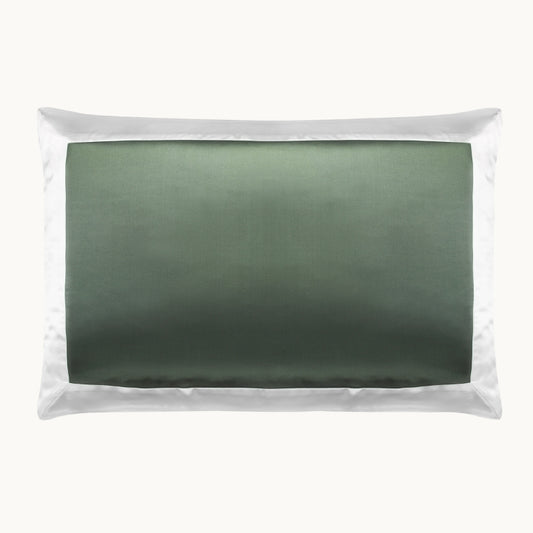
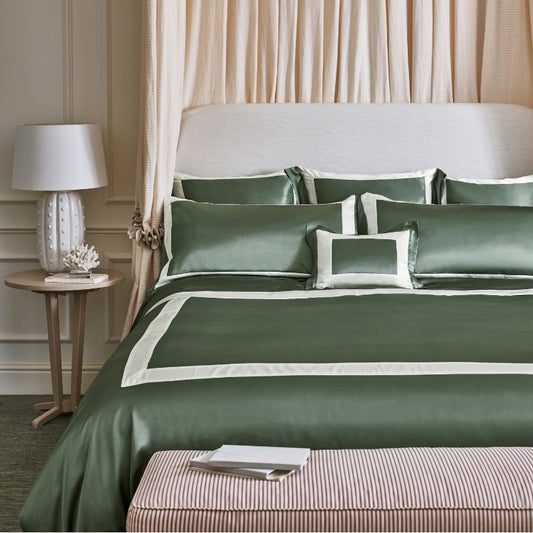
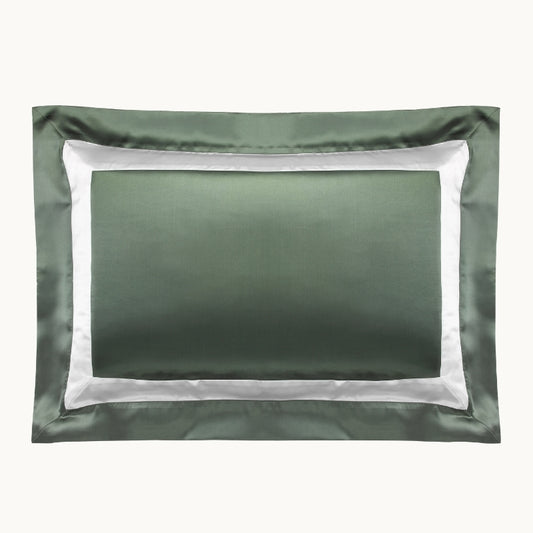
Signature plain, calming sage green |
Coordinating with the wider silk bedding range, from $120.00 |
Shop All Gingerlily Silk Pillowcases
Complete Your Overnight Silk Routine
A silk pillowcase is the foundation of a curl-friendly sleep setup, but pairing it with silk accessories extends that protection across your entire night.
The logic is consistent: wherever silk replaces a rougher fabric against your hair, friction drops and moisture stays put. For curly hair, that matters beyond just the pillow surface. A standard elastic or hair tie creates tension at the root and leaves a crease or kink that disrupts your curl pattern and takes hours to fall out. A silk scrunchie holds your curls loosely and securely without the grip that causes breakage, root indentation, or frizz at the hairline. The difference shows up clearly on morning-after curls.
A silk hair wrap takes that protection further. A pillowcase protects the hair resting against it, but a wrap encases your curls entirely, keeping the shape intact, reducing compression from movement during sleep, and sealing in moisture and any product you've applied before bed. For curlier, denser hair types that are more prone to overnight frizz and tangling, a wrap is particularly valuable as a second layer of protection alongside the pillowcase.
Used together, a silk pillowcase, silk scrunchie, and silk hair wrap create a complete overnight environment designed around your curls. Every point of contact through the night is working to preserve definition, retain moisture, and reduce breakage rather than undo the work of wash day.

Gingerlily's scrunchies and hair wraps are crafted from the same 6A-grade mulberry silk as the pillowcase collection, so the standard of care is consistent from root to tip.
Shop Gingerlily Silk Hair Accessories
Shop Silk Pillowcases for Curly Hair at Gingerlily
If your curls deserve the best overnight environment, and they do, a silk pillowcase is the most direct change you can make. Designed in London and crafted from 6A-grade mulberry silk by skilled artisans, Gingerlily's pillowcases are built to protect your hair, preserve your style, and last for years with proper care. Explore the full range of colors, prints, and sizes at gingerlily.com.
Read Our Complete Guide to Mulberry Silk
FAQs: Pillowcases for Curly Hair
Is a silk pillowcase worth it for curly hair?
Yes, for curly hair specifically, a silk pillowcase is one of the most effective investments in your routine. Silk reduces the friction that lifts the hair cuticle and causes frizz, retains the moisture and conditioning products that cotton would otherwise absorb, and creates a stable sleep environment that helps preserve curl definition overnight. The difference is typically noticeable within the first few nights, and a well-cared-for silk pillowcase will last for years, making it a worthwhile long-term purchase.
Is silk or satin better for curly hair?
Silk is better for curly hair than satin, though both are a significant improvement over cotton. Most satin pillowcases are made from polyester, a synthetic weave that mimics silk's smooth surface but traps heat, lacks silk's natural protein properties, and does not retain moisture as effectively. Silk is a natural fiber that combines low friction with genuine moisture retention and temperature regulation. For curly hair, that combination produces better results over time.
Do silk pillowcases really reduce frizz?
Yes. Frizz is primarily caused by friction lifting the hair cuticle and by moisture escaping from the hair shaft. Silk addresses both: its smooth surface allows hair to glide without snagging, which keeps the cuticle flatter, and its non-absorbent properties mean your hair retains its natural oils and any products you applied before bed. Silk also carries a natural charge that reduces static, another contributor to frizz that cotton and polyester satin do not address.
What momme silk is best for curly hair?
A momme weight of 19mm is the standard recommendation for a hair-protective silk pillowcase, and it is the weight Gingerlily uses across its range. At 19 momme, the silk is dense enough to be genuinely smooth and durable, providing reliable frizz reduction and curl protection, without being unnecessarily heavy. Pillowcases below 15 momme tend to feel thin and wear quickly, while those above 22 momme offer diminishing returns for hair benefit specifically.
Is a silk pillowcase good for 4C hair?
Yes. Type 4C hair is the curl pattern that benefits most from a silk pillowcase because it is the most prone to dryness, shrinkage, and single-strand knots, all of which are made worse by friction and moisture loss overnight. Silk's smooth, non-absorbent surface reduces the friction that leads to knots and breakage, and helps retain the moisture that 4C hair struggles to hold. For maximum protection, many people with 4C hair combine a silk pillowcase with a silk bonnet or scarf for additional coverage during sleep.
Can a silk pillowcase replace a bonnet or hair wrap for curly hair?
For most curl types, including type 2 waves through type 3C curls, a silk pillowcase provides excellent overnight protection on its own. For tighter, more densely coiled patterns (4A, 4B, 4C), a silk pillowcase is genuinely beneficial but works best as part of a layered approach. Adding a silk bonnet or wrapping hair in a silk scarf on top of the pineapple method gives extra coverage for those who move a lot during sleep or want maximum definition preservation. The pillowcase acts as a backup layer of protection if the bonnet comes off during the night, and it means your sleep environment is silk against hair regardless.